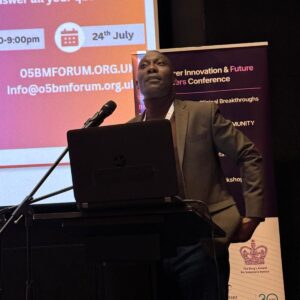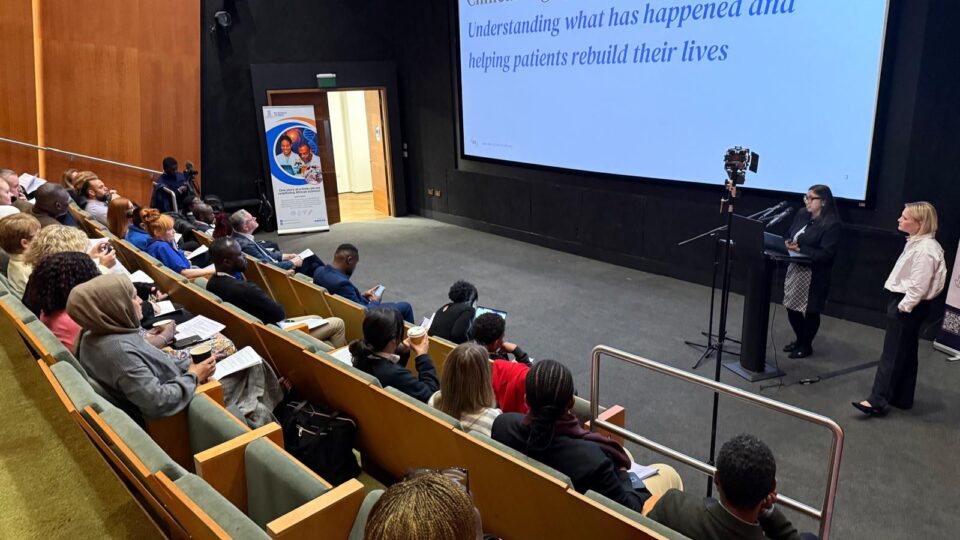
The Over 50s Black Men Forum (O5BM) was invited to present at the Cancer Innovation and Future Leaders Conference 2026 on 21 October 2026, sharing practical insight from four years of community-led health conversations with older Black men.
O5BM presented “Ask the Doctors: What Older Black Men Really Want to Know About Their Health – Lessons from a Community-Led Health Intervention.”
The presentation explored what O5BM has learned through its Ask the Doctors (ATD) programme, which brings older Black men and clinicians together in a trusted community setting where men can raise health questions, discuss concerns in their own words and receive clear explanations about appropriate next steps.
Listening to the questions men actually ask
A central message from O5BM was that making health information available is not the same as achieving meaningful engagement.
Ask the Doctors was developed around a simple principle: start with the questions men bring, rather than only the messages health services want to deliver.
Over four years, O5BM has delivered 25 Ask the Doctors sessions, with some sessions attracting between 80 and 120 men. Analysis of the programme has captured 301 documented discussion episodes, providing an important source of community insight into the concerns, questions and uncertainties older Black men bring to health conversations.
Prostate health emerges as a major concern
The presentation showed that prostate and urinary health accounted for 18.9% of documented discussion episodes, making it the most frequently identified health theme within the analysed conversations.
Men’s questions were not limited to general awareness. They wanted practical explanations about risk and prevention, PSA testing, MRI scans, biopsies, treatment and recovery, and how to navigate conversations and next steps with their GP.
Other frequently discussed areas included nutrition and healthy ageing, navigating healthcare, diabetes, other cancers, cardiovascular health and mental wellbeing.
The questions raised through Ask the Doctors illustrate the realities behind cancer-awareness statistics. Men ask questions such as whether they should consider a PSA test when they have no symptoms, what a raised PSA means when an MRI appears normal, what happens during a prostate biopsy, and what to do when symptoms continue after visiting a GP.
Moving beyond awareness
One of O5BM’s key conclusions was that health awareness alone is not enough.
Across the Ask the Doctors programme, men repeatedly demonstrated a need to understand their test results, navigate healthcare, make informed decisions about treatment and have somewhere they can return with further questions.
As the presentation highlighted: The question is often not simply “What is wrong?” but “What do I do next?”
In response, O5BM is developing opportunities for deeper, continuing conversation around prostate cancer, including discussion before testing, support during diagnosis and treatment, and conversations about recovery, relationships, emotional wellbeing and living well following treatment.
This approach is intended to complement NHS and cancer-charity services, not replace clinical advice or treatment decisions.
Four lessons for better cancer engagement
O5BM concluded its presentation with four practical lessons for organisations working to improve cancer outcomes and reduce health inequalities:
- Listen before designing – use the questions communities actually ask to shape cancer information, engagement and research priorities.
- Go beyond awareness – help people understand testing, results, treatment choices and continuing support.
- Value different journeys – bring clinical knowledge and varied lived experiences into the conversation.
- Build with communities – work through trusted community organisations to sustain dialogue, strengthen peer learning and create meaningful opportunities for communities to influence cancer services and research.
The central message was clear: better cancer engagement begins when communities help shape the conversation, rather than simply receiving information.
O5BM was pleased to contribute the lived experience and questions of older Black men to a conference focused on innovation, health equity and the future of cancer care. We look forward to continuing to work with clinicians, researchers, cancer organisations, NHS partners and communities to develop approaches that build trust, encourage earlier engagement and ensure that community voices help shape better cancer services and research.